


One of the most common infectious diseases is foot fungus.Since it can lead to quite serious consequences, it is necessary to carry out appropriate treatment as soon as possible.It should be based on the type of disease, the time of onset of symptoms and the presence of other pathological processes in the body.
Factors affecting yeast infection
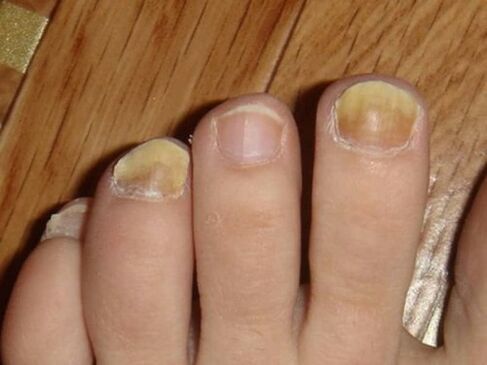
Athlete's foot is the most common fungal infection on Earth.This is due to the fact that there are many factors that have a beneficial effect on the development of the disease:
- Endocrine diseases, including diabetes mellitus;
- Immunodeficiency of various etiology;
- Poor circulation in the lower extremities;
- Some pathologies of the foot structure (deformation, narrow spaces between the phalanges, diabetic form, etc.);
- Wearing poor quality or inappropriate footwear;
- Non-observance of sanitary and hygienic rules.
The above factors do not lead to fungal disease, but greatly increase the risk of infection. First of all, this applies to people who visit places with an increased risk of transmitting foot fungus.These are the following institutions:
- Swimming pools;
- saunas;
- Baths;
- gyms;
- Fitness centers;
- Beaches etc.
The risk of contracting a yeast infection is greatly increased when you live in the same room with a person who ignores the treatment process of this disease if the symptoms are severe.It is strictly forbidden to use common hygiene items (towels, toothbrushes, etc.), because this almost completely guarantees the transfer of fungal spores.
Symptoms of foot fungus
Symptoms of the fungus of the lower extremities directly depend on the form of the disease, but in general we can identify a certain standard list of symptoms that occur most often:
- Itchy skin;
- Inflammatory process on the surface of the epidermis;
- Dryness and peeling of the upper layers of the skin;
- The appearance of certain formations on the skin of the legs (blisters, papules, vesicles);
- Brittleness and gradual destruction of nail plates;
- Thickening of the skin, mainly on the soles of the feet;
- The appearance of cracks in places of thickening;
- The formation of scales that gradually fall from the surface of the leg.
Often the symptoms of foot fungus appear gradually and not all at once, so it is very important to pay attention to the problem at the first sign, make a diagnosis and start appropriate treatment.
Types and forms of foot fungus
In medical practice, there are only four forms of foot fungus spread:
- Interdigital (intertriginous);
- Squamous-hyperkeratotic;
- Vesicular (dyshidrotic);
- Deleted.
The most common type of foot fungus is the interdigital form, which is most active in summer. The folds between the 3rd and 4th, as well as the 4th and 5th fingers are often affected. But as the disease progresses, skin manifestations spread to all areas between the phalanges of the foot.At first, only a small ulcer or crack appears.It can be dry or wet.White or greenish skin is layered along the perimeter, gradually turning into scales.At the same time, the disease does not spread to the rear part of the foot, it is localized only in the front part.
The squamous-hyperkeratotic form of nail fungus is a two-process disease.Squamous is a lesion of only the upper layer of the skin, while hyperkeratosis is a further growth of the stratum corneum, which occurs after the preliminary spread of the fungus.The lesion is localized on the sole, affecting it directly along the rib.First, scales form on it, after which a thick layer of changed skin gradually grows.
After the keratinized part gets a certain thickness, cracks often appear in the heel area.They bring not only discomfort, but also severe pain when walking.Almost always, if left untreated, this form of foot fungus also affects the nails, causing onychomycosis.So, not only the foot is affected, but also other parts of the legs.
The vesicular form of foot fungus is the rarest and rarest.It differs in that vesicles appear on the lower extremities - various bubbles and blisters with a certain liquid inside.As the disease progresses, the fullness of the formations becomes cloudy, after which they burst.After that, pinkish-red ulcers appear, which can even merge with each other.This leads to extensive erosive phenomena that occur on the legs.The biggest problem is the open access of bacteria and other pathogens to these wounds.Therefore, often a sick person can get other diseases besides fungus.This in turn affects not only overall health, but also the duration and complexity of treatment.
The deleted form of foot fungus has the mildest symptoms, which are manifested only by the appearance of a small, almost imperceptible "flour" on the surface of the limb.In some cases, microcracks appear, which are noticeable only during a longer examination or magnification.These symptoms are accompanied by mild itching or burning.As in other stages, foot fungus can also affect the nails, after which a person begins to pay attention to changes in the appearance of his feet.
Diagnosis and treatment of foot fungus

The diagnosis of foot mycosis should be made by a qualified mycologist. If there is no such specialist, contact a dermatologist.The following methods are used for diagnosis:
- Taking and microscopic analysis of scrapings;
- Cultural research;
- DNA research.
Treatment of foot fungus is often carried out with drugs of a wide spectrum of action, which is why it is not necessary to determine which pathogen has become the causative agent.It is only important to establish that the lesion is fungal in nature.
Doctors often recommend both external treatment and systemic therapy of fungi. In the early stages, in most cases, external antifungals are used in available forms.All creams, sprays and varnishes should not be applied to dirty skin.Research has shown that it is not worth doing, because in this case they do not bring the desired effect.
The simplest way of treatment is for the interdigital form of fungus.It can heal in one to two weeks.To do this, apply topical antifungals to the affected areas of the skin once a day.It is best to start therapy at this stage, and not to treat advanced forms of the disease.
In the case of the squamous-hyperkeratotic form, the keratinization on the sole should be removed first.This can be done with a special appliance procedure or at home with salicylic ointment compresses.After exposure to a thick layer of altered tissue, it should be scraped off gradually.After removing the top layer, you can start treating foot fungus with ointments.
The vesicular form should not be immediately treated with antifungal drugs until its acute form is eliminated.In some cases, corticosteroid ointments are prescribed, and only after that, an antimycotic.
Fungicidal foams, creams and ointments are used to treat deleted forms of foot fungus.In this case, you can wash your feet only immediately before the next application of the medicine.
Since foot fungus can penetrate into the body itself, and not only on the surface, it is necessary to undertake systemic therapy.This is especially important when the disease becomes extensive and severe.Doctors often recommend taking antimycotic tablets in such cases along with external means.Therefore, the treatment of foot fungus will have a comprehensive effect and help you cope with the disease faster.
Traditional methods of treatment

Fungi on the skin of the feet often do not pose a great danger to human life and health, but they bring some discomfort.That is why the infected try to fight this disease by all possible means.This also applies to traditional methods of treatment, which are quite effective in some stages of the disease.
Baths with wine vinegar have a beneficial effect on the treatment of foot fungus. This is due to the fact that this substance has an antiseptic effect. Before taking such baths, it is necessary to wash and dry the feet well.Only after that can they be placed in a container with a vinegar solution for 3-5 minutes.After the procedure, socks soaked in the same solution should be put on the feet, which should not be removed until the morning.
Washing the affected areas of the feet with a decoction of medicinal herbs is one of the oldest methods of treating foot fungus.To do this, mix equal amounts of calendula flowers, oak bark, verbena and dried blackberries.Add 3 tablespoons of this mixture to the water and cook on low heat for 15-20 minutes.After that, the liquid must be filtered, and the resulting broth used for lotions.
In some cases, special homemade anti-fungal ointments help.Wood ash and pork fat are used for their production.These components must be mixed until a homogeneous mass of thick consistency is obtained.It should be applied to the areas where the rash appears twice a day.
Prevention of foot fungus
In order to prevent foot fungus infection, you must follow certain rules for the prevention of this disease:
- It is necessary to limit walking barefoot in places of increased risk of infection, where infection occurs most often;
- People in certain professions (army, athletes, factory workers and miners) should use protective creams;
- It is necessary to disinfect both the inner and outer surface of the shoes once a month;
- It is important to eat properly and take the necessary amount of vitamins;
- Drinking alcoholic beverages and smoking cigarettes should be stopped;
- Bathroom surfaces should be thoroughly disinfected and wiped;
- Bedding should be washed well and ironed at high temperatures;
- There is no need to wear other people's clothes and use personal hygiene products that are not individual;
- It is also important that a pedicure is done every six months, because it is aimed at removing the environment in which fungal spores like to penetrate and multiply.
By following all preventive measures, you can practically eliminate the possibility of possible infection.If the fungus does penetrate someone's skin, these rules should not be ignored either, so as not to worsen the current situation.
Conclusion
It is worth remembering that foot fungus is much easier to prevent than to treat.If the moment of infection is missed, therapy should be started as soon as possible, before symptoms develop strongly and lead to serious consequences. If the treatment is carried out comprehensively and completely, after some time the patient will not even remember the unpleasant appearance of the legs that was at the beginning.